SOC 2 Compliance Checklist for Startups & SMBs

As a startup founder, you have likely encountered the term SOC 2 compliance during conversations with enterprise prospects or investor due diligence processes. While the prospect of undergoing a formal audit can seem daunting, understanding the requirements and preparing systematically can make the journey significantly smoother. This comprehensive SOC 2 compliance checklist will guide you through the essential steps to prepare for your first audit.
See SimpleAudit in 60 seconds.
Watch a quick product overview — no signup, no commitment.
What Four Months of Messy Reality Actually Taught Me
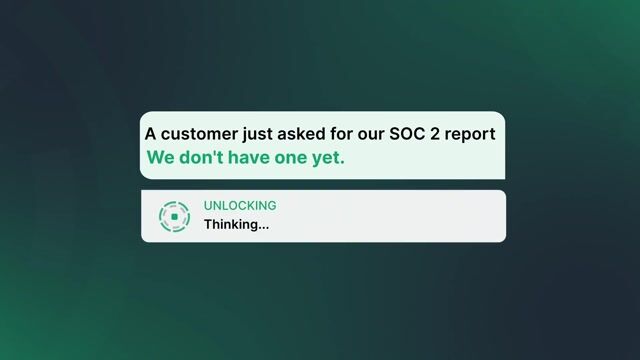
I still remember the conversation that kicked off our SOC 2 journey. I was running ops at a prior company, and our sales team kept hitting the same wall: "Can you send us your SOC 2 Type 2 report?" For enterprise prospects especially, no report meant no deal. Not "we'll think about it" — just a hard stop.
My honest first reaction? Relief, actually. I'd seen SOC 2 done at smaller service businesses before, though I'd only been an observer. Now it was my responsibility, and I knew three things: it could be done, we absolutely needed it, and following SOC 2's best practices would genuinely make our security posture better. What I didn't know was just how messy the reality would be.
We had infrastructure spread across two cloud providers, several physical offices, and a small army of remote employees working on hardware that had been set up, well, inconsistently. Getting all of that unified and protected took us about four months before we were ready to begin our initial three-month audit period. Here's what I learned — and what I wish someone had told me before we started.
Your first three-month audit will feel easy. It's when you expand to 12 months that your processes get truly tested.
If you want a condensed version you can check off as you go, see our interactive SOC 2 checklist or grab our free, open source SOC 2 readiness checklist to track your prep step by step. For stage-specific guidance, see SOC 2 for pre-seed startups, SOC 2 for seed-stage startups, or SOC 2 for B2B SaaS companies.
What SOC 2 Actually Is (And Why Startups Can't Ignore It Anymore)
SOC 2 stands for System and Organization Controls 2. It's an auditing framework from the AICPA that evaluates how well you protect customer data based on five Trust Services Criteria: Security, Availability, Processing Integrity, Confidentiality, and Privacy.
For startups, SOC 2 has become table stakes for enterprise sales. When your product touches sensitive data, procurement teams won't even continue the conversation without seeing your report. Having that report in hand transforms security discussions from "convince us you're trustworthy" to "we've verified you're trustworthy" — it accelerates sales cycles in a way few other investments can match.
The Step-by-Step Checklist (With Reality Checks)
Step 1: Define Your Audit Scope — And Keep It Honest
Before you dive into implementation, nail down exactly what systems, processes, and data you're including in your audit scope. Most startups start with Security as the foundational Trust Services Criterion, then layer in others based on what customers actually ask for.
Document the boundaries clearly: which products or services you're covering, what infrastructure and systems are involved, and which third-party vendors touch your data. A well-defined scope prevents the nightmare of scope creep mid-audit and helps auditors understand exactly what they're evaluating.
Reality check: If you're like we were — split across multiple clouds with distributed teams — be brutally honest about your current state. Don't scope based on where you wish you were. Scope based on what you can actually get audit-ready in your timeline.
Step 2: Conduct a Gap Assessment (Without Spending $15K)
Here's my spiciest take: the traditional gap assessment is highway robbery for startups. When I was preparing for our audit, consultants quoted $10-15K just to tell us what we were missing. That's absurd for an early-stage company.
A gap assessment should evaluate your current security controls, policies, and procedures against the Trust Services Criteria you've selected. Create a detailed inventory of gaps, prioritize them by risk level and remediation effort, and that becomes your implementation roadmap.
You don't need to pay enterprise consulting rates for this. The frameworks are public, the requirements are well-documented, and the Trust Services Criteria already tell you what you need. (This is exactly why I built SimpleAudit — to replace overpriced gap analyses with something a non-compliance-person can actually use.)
Not sure where you stand?
Take the 5-minute readiness assessment.
Free SOC 2 ScoreStep 3: Develop Policies That Reflect Actual Reality
SOC 2 requires comprehensive documentation covering information security, access control, incident response, change management, risk assessment, vendor management, and data classification at minimum.
Here's what matters: your policies cannot be theoretical documents that sound good. Auditors will verify that what you've written down matches what you actually do. If your policy says you review access quarterly but you've never actually done it, that's a finding waiting to happen.
The lesson I learned the hard way: Identify which policies will impact all of your employees early — like really early, in month one. We needed to convert remote workers' computers to be Intune-managed, using their Microsoft 365 accounts instead of local domain accounts. Sounds straightforward, right?
Wrong. Our remote users weren't particularly computer-savvy, and their machines had been set up in wildly different configurations over time. Only about 30% of computers converted to Intune easily. The other 70% required manual troubleshooting, one painful machine at a time. But we absolutely needed that visibility and control over remote hardware to meet our security requirements.
Skip the manual checklist.
Get the SOC 2 prep playbook.
Let the AI handle your first SOC 2. Start free trial
Start free trialOrganizational change takes time. Technical controls you can implement in a weekend. Getting humans to change their workflows? That's a multi-month project.
Step 4: Implement Security Controls That Fit Your Reality
With policies documented, implement the technical and administrative controls you need. Common controls include multi-factor authentication everywhere, encryption at rest and in transit, regular vulnerability scanning and penetration testing, automated monitoring and alerting, employee security training, and formal onboarding/offboarding procedures.
Focus on the highest-risk gaps first. And remember: SOC 2 isn't prescriptive about specific technologies. Choose solutions that fit your infrastructure and budget, not what works for a 500-person enterprise.
Step 5: Establish Evidence Collection (But Don't Overthink It)
Auditors need evidence that your controls operate effectively over time: system logs, access records, policy acknowledgment signatures, training completion records, change management tickets, incident response documentation, vendor assessments.
Here's where most GRC (Governance, Risk, and Compliance) platforms completely miss the mark for startups. They're obsessed with automated evidence collection — which sounds great until you realize the heavy upfront lift required to integrate everything. That wasn't even the challenge I needed to solve. (More on this in why enterprise GRC platforms are overkill for seed-stage startups — including where the actual $24K of SOC 2 cost goes when it isn't going to tooling.)
What I actually needed was help maintaining the cadence I'd declared in my policies. I needed a system that reminded me when it was time for quarterly access reviews, policy reviews, board meeting minutes, vendor reassessments. I needed to ensure that when audit time came, everything was easy to find and I hadn't accidentally skipped a required review.
Automate what makes sense, but don't let the perfect evidence collection system become the enemy of actually maintaining your controls.
Step 6: Select an Auditor (And Budget Realistically)
When selecting a CPA firm, I interviewed several and got quotes ranging from $25-45K for a Security-only SOC 2 Type 2. Some included gap analysis, some didn't. Here's what they often don't mention upfront: you'll need additional services that have their own costs.
Third-party penetration testing? Traditionally $7-10K annually — though agentic pen tests that satisfy SOC 2 now start at $99 through SimpleAudit partners. Third-party incident response testing? Traditionally another $8-10K, but tabletop exercises are now included in SimpleAudit's Pro plan. Neither is strictly mandated by the Security-only criteria, but most auditors expect them in practice — budget for them deliberately instead of letting them add a surprise $15-20K the traditional way.
For a full breakdown of what SOC 2 costs at every stage, see our SOC 2 cost guide.
Look for a firm that's reasonably priced and that you genuinely have good rapport with. You'll be working closely with them during the audit period, and that relationship matters more than you'd think.
For your first audit, some say to consider a Type 1 report, which evaluates the design of your controls at a specific point in time. However, SOC2 Type 1 costs money as well, so I recommend going straight for SOC2 Type 2 which evaluates control effectiveness over 3-12 months. Why would I recommend that? Once you sign with a CPA firm, you can request a letter of attestation stating you are in an audit period, and that is more valuable that a SOC2 Type 1 report while costing nothing.
The "No Pass/Fail" Reality That Changes Everything
Here's something that surprised me: there's not actually a pass or fail with SOC 2. Whatever the auditors find that conflicts with your controls or policies, they flag as a finding in your report. You then get to provide a management response to each finding. That report — findings, management responses, and all — is what you hand to clients after they sign an NDA.
This changes the psychology completely. It's not about being perfect. It's about being honest about your controls, operating them consistently, and having thoughtful responses when gaps are identified. Clients can see your findings and decide if they're acceptable risks. Many times, they are.
Common Pitfalls (That I Watched Happen In Real Time)
Underestimating timeline: Don't plan for less than three to six months of prep. We took four months and that felt aggressive. Rushing creates gaps and increases findings.
Neglecting employee training: Your team must understand security policies and their role in compliance. Regular training sessions and policy acknowledgments aren't bureaucratic theater — auditors will absolutely check for them, and they matter for actual security.
Overlooking vendor management: Your SOC 2 report extends to third-party vendors who process data on your behalf. Maintain a vendor inventory with risk assessments and security documentation for each. This was more time-consuming than I expected.
Treating it as one-and-done: SOC 2 requires continuous monitoring and improvement. Build compliance into your operational rhythms from day one. The startups that struggle are the ones who sprint for the audit, then let everything lapse until next year's scramble.
Start With the Slow Stuff First
If I could go back and tell myself one thing at the beginning of our SOC 2 journey, it would be this: start the employee-facing policy changes immediately. Don't wait until you've perfected your technical controls.
The hard part isn't configuring your cloud infrastructure — that's just time and focus. The hard part is organizational change. Getting non-technical remote employees to adopt new security practices, converting their machines to managed devices, building a culture where people actually follow incident response procedures instead of Slacking someone "hey is the app down?"
That's where your four months will actually go.
The Bottom Line
Achieving SOC 2 compliance is genuinely valuable work. It's not just a checkbox for enterprise sales (though it absolutely is that). Following these practices made our security posture measurably better. We had visibility and control we didn't have before. We caught issues earlier. We had processes that actually worked instead of tribal knowledge that walked out the door when someone quit.
Start your journey by defining scope and conducting an honest gap assessment. Budget realistically — the traditional path runs $25-45K for the audit plus $16-20K for third-party testing, but a lean stack (3-month observation period, Security-only scope, peer-reviewed boutique auditor, agentic pen test, Pro-included tabletops) gets the same report for a fraction of that — see the current cost breakdown. Give yourself at least four months of prep time. And for the love of all that's holy, start the organizational change processes early. Compare SimpleAudit pricing to see how the platform fits that budget.
The sooner you begin, the sooner you can stop losing deals to "send us your SOC 2 report" and start having more productive conversations with enterprise buyers about the actual value you deliver.
Written by Joe, who led SOC 2 at a prior company before founding SimpleAudit — the AI-guided compliance platform built for founders and owners who don't have a CTO hat to wear.
Get your free SOC 2 score
See your readiness in 5 minutes — no credit card.
Related Articles

Enterprise GRC Platforms Are Overkill for Seed-Stage Startups (And I Have the $24K Receipt to Prove It)
I demoed Vanta and Drata before my SOC 2 — and paid $24K elsewhere instead. Here's why seed-stage startups don't need enterprise GRC automation.
Guide
SOC 2 Checklist
Interactive checklist to track your audit preparation progress.